When there’s no one else at the wheel
Picture this. You’re midway through a sprint. The handoff call is wrapping up when an engineer asks, “Where’s the source of truth for this flow?” You glance around the Zoom call and realize it’s just you. There’s no product manager. The role hasn’t been filled yet, and the work still needs to move forward.
So now what?
You could wait and let the process stall. Or you could roll up your sleeves, step into the gap, and keep the momentum going.
That’s what I did. I opened a fresh doc, titled it “Design-led PRD,” and started figuring things out.
How to think like a product manager without becoming one
- Start with outcomes, not just interfaces.
Pick one clear business goal. For example, “Reduce drop-off on step two by 20 percent.” Use that as your anchor. Every decision ties back to it. - Describe the problem before you sketch the screen.
Explain what’s broken and who it affects. Back it up with a few facts or quotes. Once that’s clear, move on to possible solutions. Don’t rush to Figma. - Share early and often.
Break your work into small pieces. Share what you’re working on a little at a time. Stakeholders get a chance to chime in, and you avoid a big surprise later on.
Doing discovery when you’re the whole trio
Try this lean discovery process:
- Talk to four to six users. Just 15 minutes each is enough.
- Collect a few screenshots from competitors. Write down what works or doesn’t.
- Wrap it all in a short summary. Focus on the problem, why it matters, and how you’ll know if it’s working.
Keep a decision log:
Use a simple doc to track what you chose, why it made sense, and what it replaced. Link to any mocks or research. This gives clarity now and helps anyone joining later.
Set a standing check-in:
Book a 20-minute call on Fridays. No decks. Just screenshare what’s done, what’s in progress, and what’s on hold.
Writing user stories that don’t need translation
Use a clean format like this:
When [trigger or context]
I want to [action the user takes]
So that [clear benefit]
Example:
When I’m picking a plan during signup I want to know I can cancel at any time so that I feel comfortable entering my credit card
Acceptance notes:
- Tooltip appears within 300 milliseconds
- Text reads “Cancel at any time” at a basic reading level
- A specific event is logged for analytics
Post it in the team’s tracking tool. Ask for feedback. If no one objects, you’re set.
Prioritize with a simple board
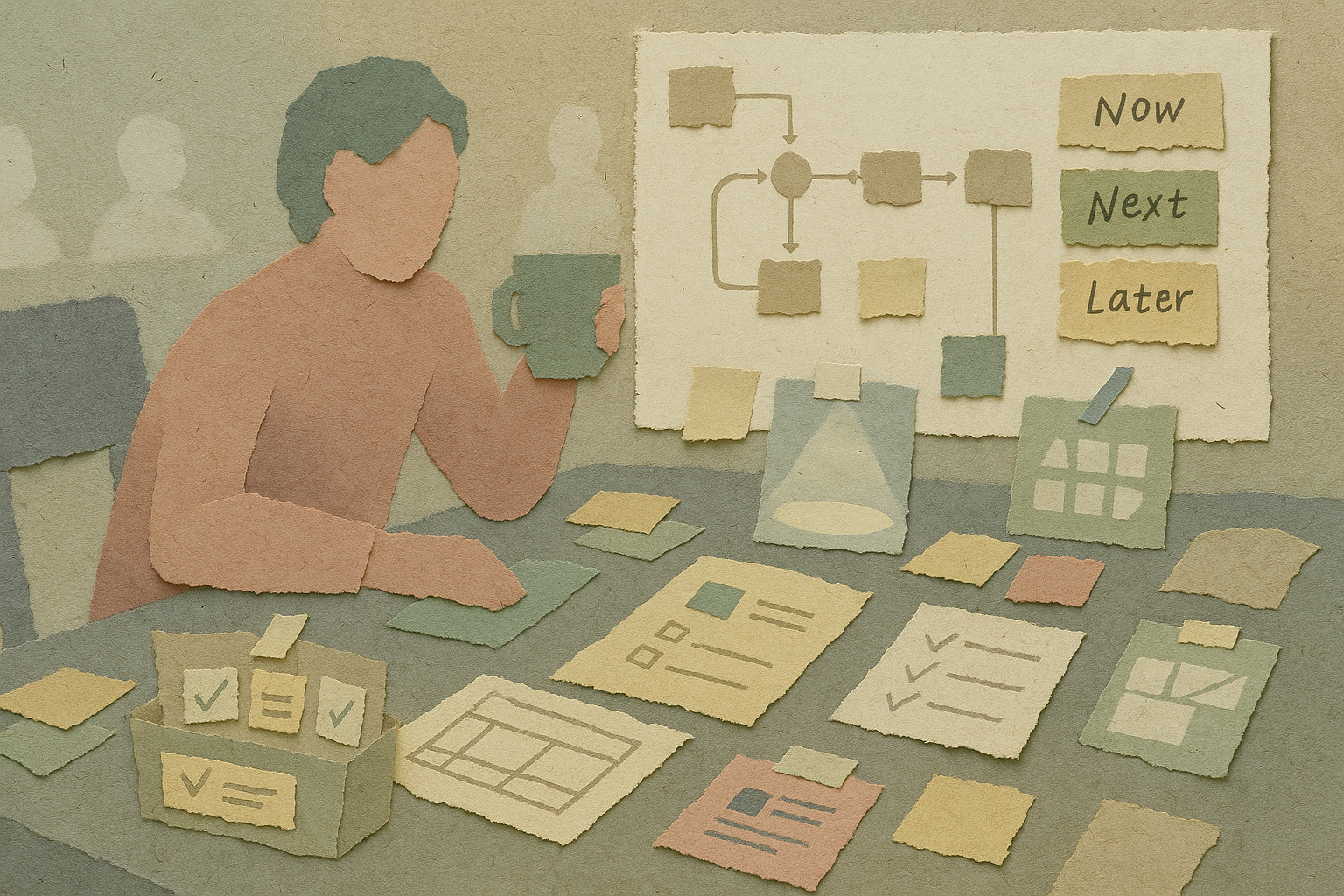
Instead of building a full roadmap, try using a Now / Next / Later board:
- Now – work that’s active in this sprint
- Next – work that’s ready once you finish what’s in Now
- Later – ideas that need more time, budget, or input
This setup keeps the team aligned and stops distractions from sneaking into your current work.
Avoid common traps when you’re flying solo
- Over-researching: You don’t need 30 interviews. Start with five.
- Designing for every edge case: Stick to the main path until someone truly needs the edge case.
- Making quiet decisions: Share your thinking in Slack or a quick doc. Don’t wait for someone to ask.
A calm, steady rhythm for the week
| Monday | Revisit your outcome with your lead or founder. |
| Tuesday | Run short user calls and write a few user stories. |
| Wednesday | Prototype a small piece and check it with engineering. |
| Thursday | Test your flow with users. Note where they get stuck. |
| Friday | Share a quick walkthrough, update your docs, and prep for next week. |
When the product manager joins later
Hand off your thinking like a welcome kit. Include:
- Your outcome statement and user needs
- The Now / Next / Later board
- A folder of user stories
- A short doc with notes from research and testing
This makes onboarding smoother and shows how far the work has come.
Strong teams don’t wait for perfect conditions
Working without a product manager can feel like riding a bike with no handlebars. But if you focus on clear outcomes, user needs, and steady rhythm, you’ll keep moving forward. No fancy frameworks needed. Just enough structure to help you think, share, and keep building.