
Leaving the Hospital With Two Deadlines
The day I was discharged from the hospital, I had two timelines. One came from my neurologist to meet motor and cognitive goals, the other from my bank because my mortgage payment wasn’t going to pause. Neither cared that using a trackpad felt like steering a grocery cart with a wet spaghetti noodle. Recovery wasn’t optional. Life kept moving, and the bills didn’t wait for a better version of me to show up.
That’s when I realized this wasn’t just healing. It was a rebuild with no feature freeze, no extra help, and no time extension.
Version 0.1 of Me: Tiny, Testable Wins
To keep going, I broke everything into sprints (calling them sprints in this context seems weird, but that’s really how I approached it).
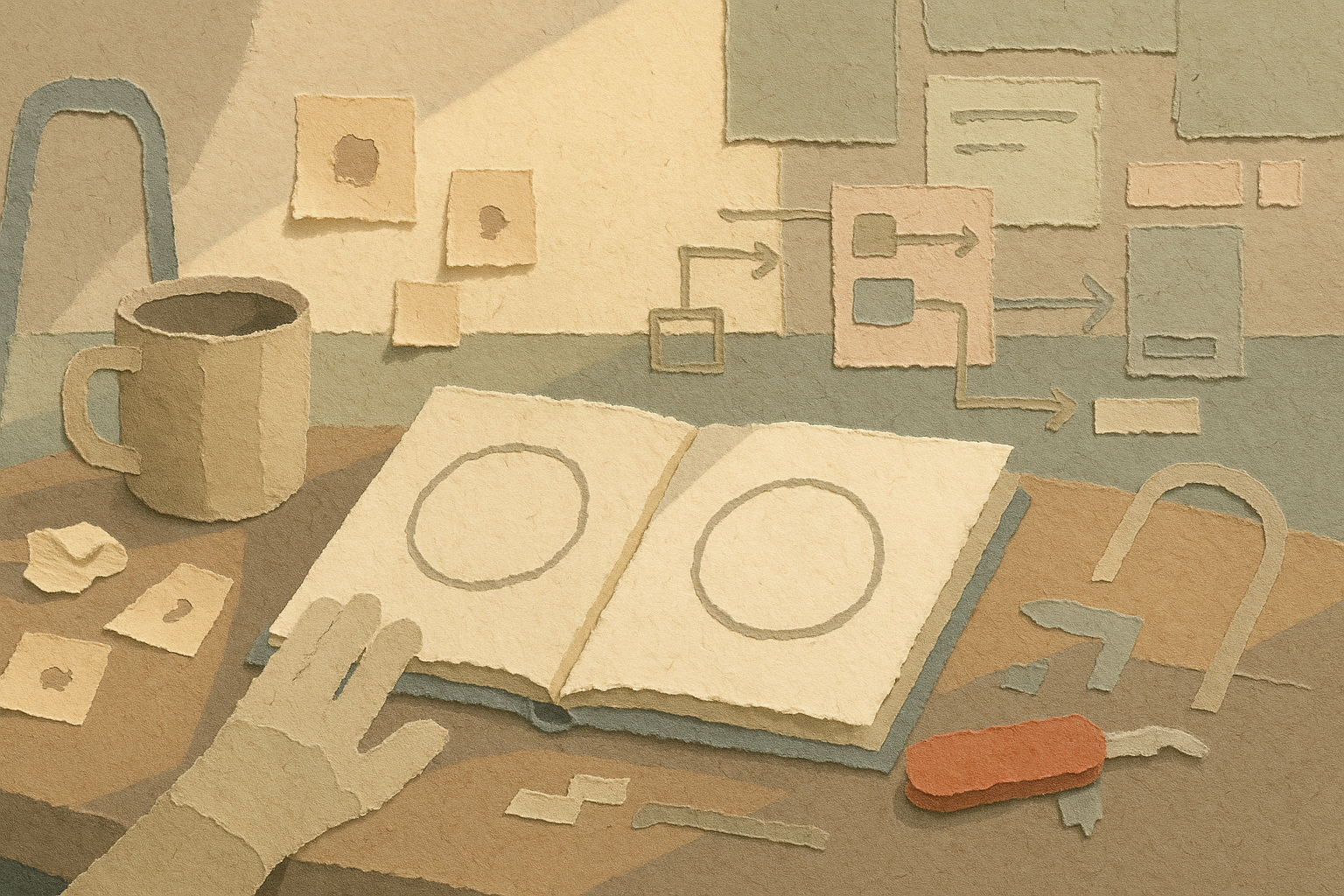
- ‘Sprint‘ goal: Draw a circle that didn’t look like an accident.
- Backlog: Thumb stability, wrist mobility, pressure control.
- Demo day: Try again tomorrow. Compare. Adjust.
The circles were awkward. But the method helped. Small, measurable wins gave me something to build on. That same thinking later helped me and my team tackle complex releases without overwhelm.
Takeaway: Shrink the unit of progress until momentum feels more powerful than fear.
Finding New North Stars
Before my stroke, I measured success by polished designs, fast delivery, and positive feedback. Those goals made sense when I had full energy and focus.
Afterward, I had to find new north stars. I didn’t lower my expectations, but I learned not to be harsh with myself when things didn’t come together perfectly right away. Instead, I focused on working more efficiently and thoughtfully. The aim was clear, dependable designs that could handle real-world use, even when users struggled or took their time. I also considered whether the team could maintain what we built while operating below full capacity.
This approach helped me hold the bar high while being patient with the process. It made the work feel steadier and more manageable.
I Went From Leader to Individual Contributor
After the stroke, I lost my leadership role and was pushed back to being an individual contributor, starting near the bottom again. I had to come back full-time to pay the bills. Living alone meant there was no option to slow down or take it easy. I had to pick back up like nothing happened. But my body was weak, and my mind tired early in the day. I needed to find a way to work long hours with limited strength, relying on willpower to keep going.
I accepted that I couldn’t control every detail or push through every challenge. So I focused on what I could do:
- Clarity: Writing one-page briefs instead of long presentations.
- Autonomy: Letting the team run experiments without waiting on me.
- Reflection: Honest check-ins on what was working and what felt draining.
Even without a formal leadership title, stepping back helped the team move faster and trust each other more. Sometimes the best way forward is to get out of the way.
Systems Thinking, One Stretch at a Time
When I was learning how to move smoothly again, I noticed something. One small movement depended on several others lining up just right. An action wasn’t just a single part doing its job, but the whole system supporting it in sync.
Turns out, features work the same way.
- Delay in payment load time affects drop-off, which impacts support volume.
- Text scaling shifts layout, which changes how users perceive responsiveness.
Looking at the system as a chain helped me place effort where it would ripple the widest. Tiny changes in one link could relieve a lot of pressure elsewhere.
Rituals That Kept Me Moving
- Pre-design warm-up: A few hand stretches before opening Sketch (this was in 2018) helped quiet the noise.
- Short stand-ups: What went right yesterday? What feels hardest today?
- Weekly clean-up: Remove one unused component. Just one. Over time, the system and my mind felt lighter.
These weren’t flashy. But the rhythm worked. Small, repeatable habits added up in a way willpower alone couldn’t.
Designing With a New Perspective
Living with new physical and cognitive challenges showed me that accessibility features are essential, not optional.
- Dark mode helps reduce eye strain, supporting users who get tired or distracted more easily.
- Logical tab order and screen reader support make navigation clearer and more usable for people relying on keyboards or assistive technology.
- Undo everywhere is vital for people with motor control difficulties, letting them fix mistakes without losing their work.
Designing with accessibility in mind doesn’t add complexity. It creates smoother, more inclusive experiences that work better for everyone.
Advice to a Past-Self (and Maybe You)
| Situation | Old Instinct | Recovery-Hardened Instinct |
|---|---|---|
| Tight deadline | Work late | Trim the scope until the work fits inside daylight |
| New platform trend | Reskin everything | Validate first, then adapt tokens and patterns if needed |
| Team burnout | Push through it | Add recovery sprints and celebrate what you trimmed |
Progress isn’t always about adding more. Sometimes it’s about removing what doesn’t need to be there.
Closing Reflection
A stroke took away the ability to use the ⌘ key, but it handed me something else: a deeper way of seeing what truly supports momentum. Great teams, solid products, and lasting systems share three things: They make room for recovery. They allow for fluctuation. They bend before they break.
So if your roadmap feels packed or your team looks tired, maybe it’s time to build in some breathing room. You never know. Your next breakthrough might be waiting on the other side of a pause.
