
Have you ever opened a roadmap deck only to find an overloaded Gantt chart that looks like a subway map after a coffee spill?
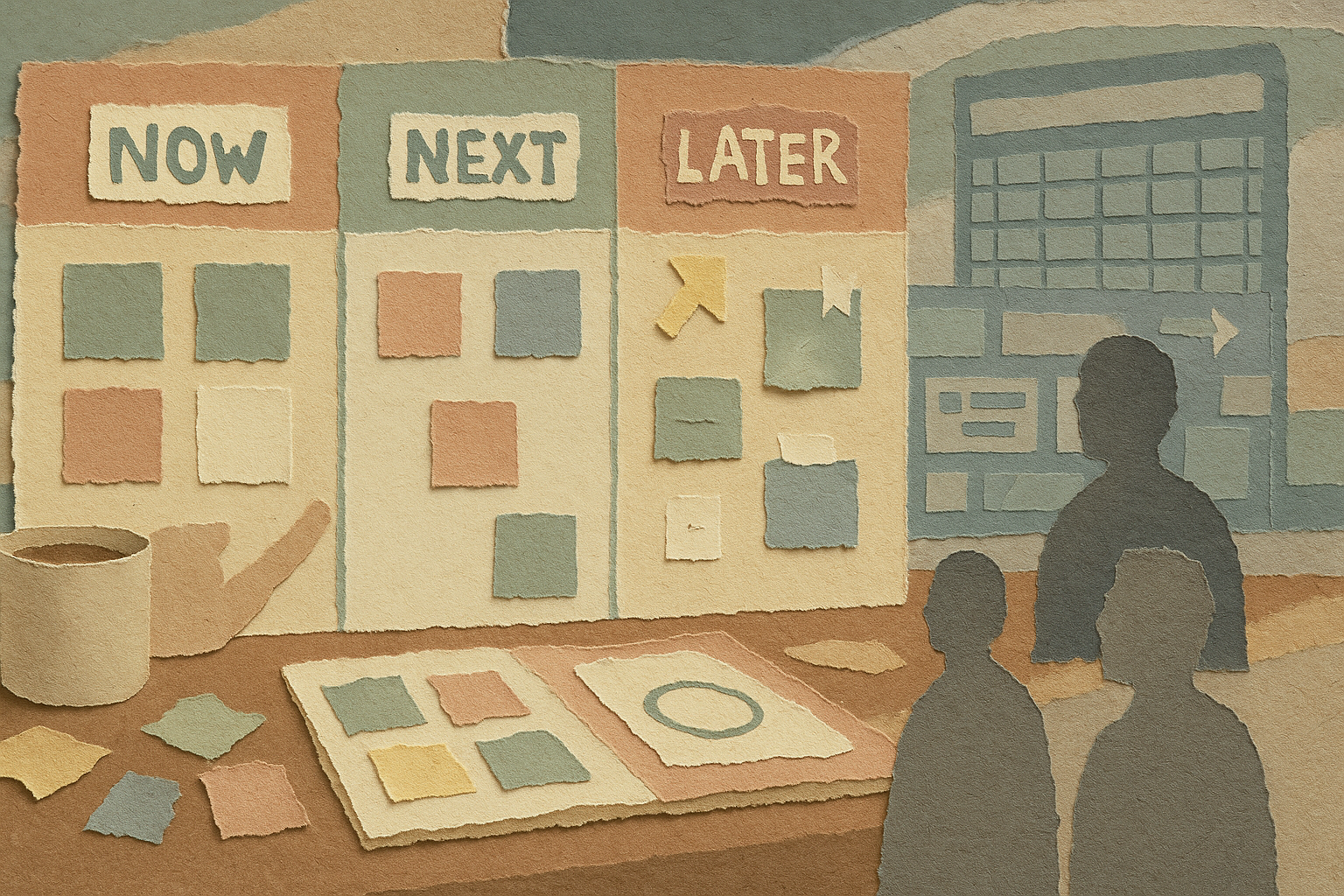
Features crowd every quarter, dependencies overlap, and the team has no clue which ticket to work on first. The Now / Next / Later framework can cut through that noise by breaking your roadmap into three clear horizons. Please stay with me for a few minutes as I explain this model and why it works better than detailed timelines. I’m also going to share a quick exercise to help sort your backlog.
What Is Now / Next / Later?
Think of it like shopping at the grocery store.
- Now is everything you’re actively putting into your cart. The items you’ve decided on, you have space for, and you’re ready to check out.
- Next holds the things you plan to find and add to your cart, but you haven’t grabbed them yet. Maybe you’re still looking for the best options or waiting to see if you have enough room.
- Later is the stuff you probably won’t buy this trip. It’s saved for next time when you have more budget or space at home.
Instead of guessing exact delivery dates months away, this method gives your team clear direction while keeping things flexible and adaptable.
Why It Works
| Benefit | How It Shows Up | Result |
|---|---|---|
| Focus | The Now lane holds only what the team can deliver in the current sprint or month. | Less context switching and faster delivery. |
| Flexibility | Only Now items have fixed dates; Next and Later remain flexible. | Plans can adjust without stress or excuses. |
| Transparency | Stakeholders see upcoming work without assuming immediate commitment. | Fewer questions about when features will ship. |
| Motivation | Teams see cards move from lane to lane as progress happens. | Small wins build momentum and morale. |
Airport Departure Boards
If you liked the grocery store example, here’s another one because who doesn’t love a good airport analogy?
Imagine an airport departure board. Flights in Now are boarding. Flights in Next show their gate but haven’t opened yet. Later flights are scheduled but still far away. Passengers get the info they need without expecting the 8 PM flight to start boarding at noon. The board updates in real time, replacing confusion with calm.
Your roadmap should do the same. Show what is boarding, what is taxiing, and what is still waiting.
Five Ground Rules for a Healthy Now / Next / Later Board
- Limit the Now lane to work your team can finish this sprint or month. Extra work moves right.
- Write problems, not solutions, in Next. For example, say “reduce onboarding drop-off” rather than “add social sign-in” to keep options open.
- Attach a clear trigger to Later cards like 1000 user requests or a new API version. Without triggers, ideas stall.
- Review the board every two weeks and ask if any Next cards can move to Now or if any Now cards are stuck and should slide back.
- Show evidence, not hope. Every card should include a data point or user quote supporting its place.
Quick Drill: Sort Your Backlog in 10 Minutes
- Write your top 20 backlog items on Post-It notes.
- Draw three columns on a whiteboard: Now, Next, Later.
- Set a timer for three minutes. Have the team place notes where they think they belong without talking.
- Discuss any differences. Ask “What evidence would move this left?” or “What risk pushes this right?”
- Take a photo of the board and share it with the team via Slack (or whatever you use). Use it as your working roadmap until your next sprint review.
Common Pitfalls
- Now creep: Everything feels urgent and lands in Now. Fix this by setting clear work-in-progress limits.
- Later graveyard: Ideas sit untouched for months. Archive or remove any that miss their triggers after three reviews.
- Hidden dependencies: Next items secretly block Now work. Track dependencies clearly on each card.
- Stakeholder misunderstanding: Some treat Later as a promise. Remind everyone that Later means potential, not commitment.
See You Later
A roadmap should guide without overwhelming, giving your team clear focus today and room to plan for tomorrow. The Now, Next, Later framework simplifies complex plans into something everyone understands and trusts. It helps avoid burnout by keeping work manageable, keeps stakeholders informed without false promises, and creates a steady rhythm that drives meaningful progress. When your roadmap feels clear and flexible, your team can move confidently, delivering value consistently while staying ready for whatever comes next.
